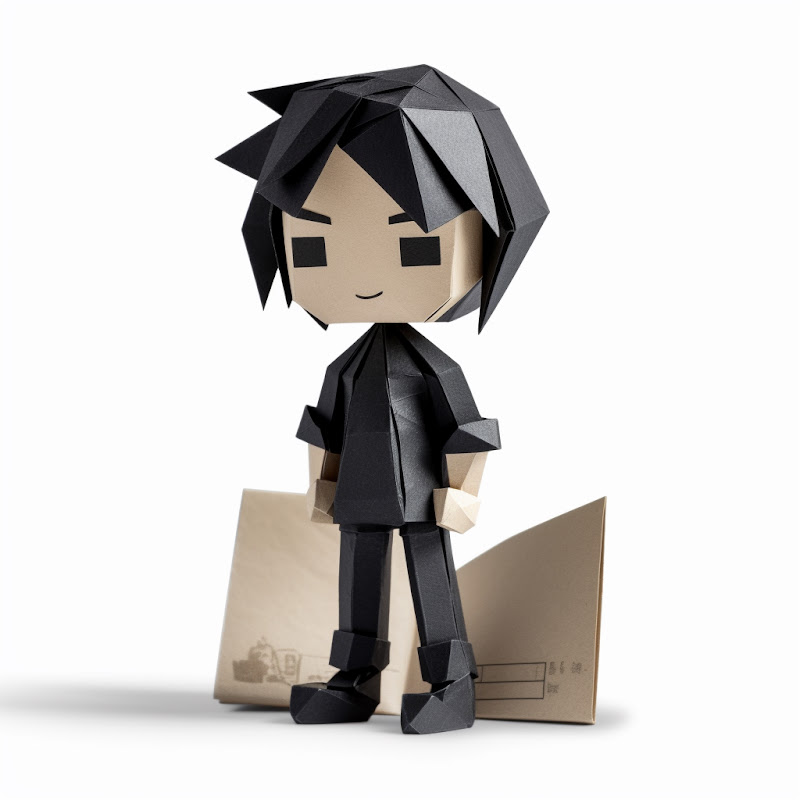
Animals · Step-by-step guide
Little Paper Teddy Bear
Fold a tiny bear with a broad face, rounded ears and a small body.
What you’ll need
- One 15 × 15 cm paper square
- A fine marker
Origami · Folding and shaping
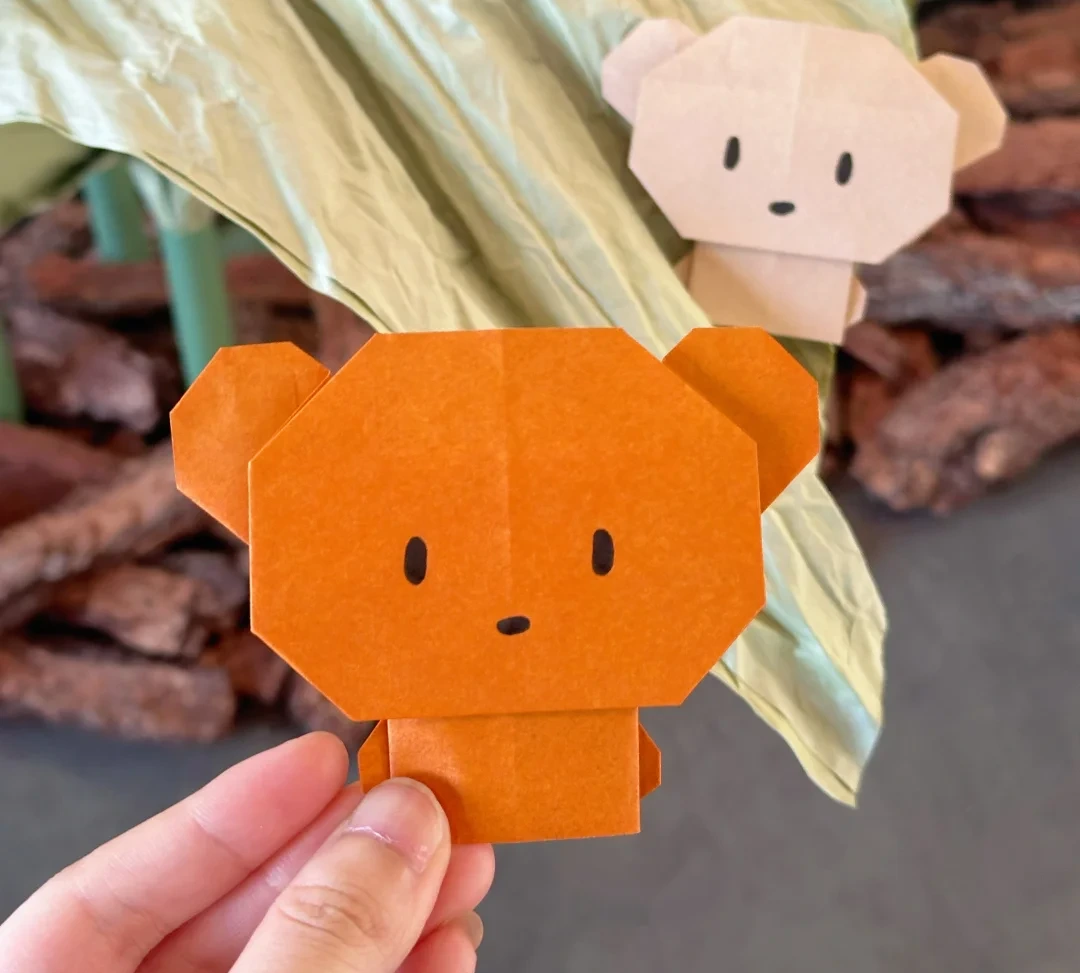
Make it, step by step.
20 steps · Original diagrams with English instructions
Read each picture from left to right, then top to bottom.
Finished model
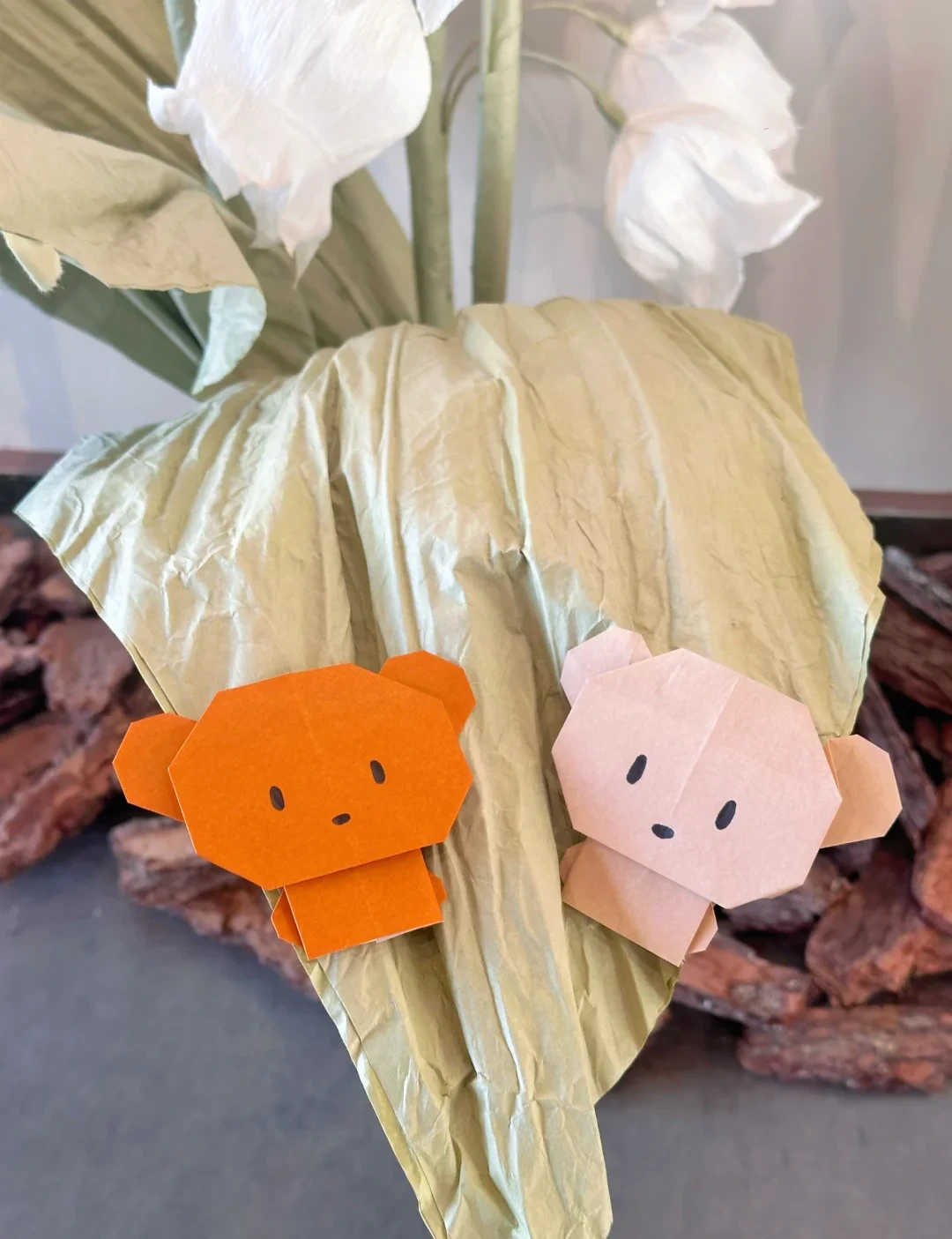 Open image at full size ↗
Use this finished example to compare the shape and proportions of your model.
Finished model
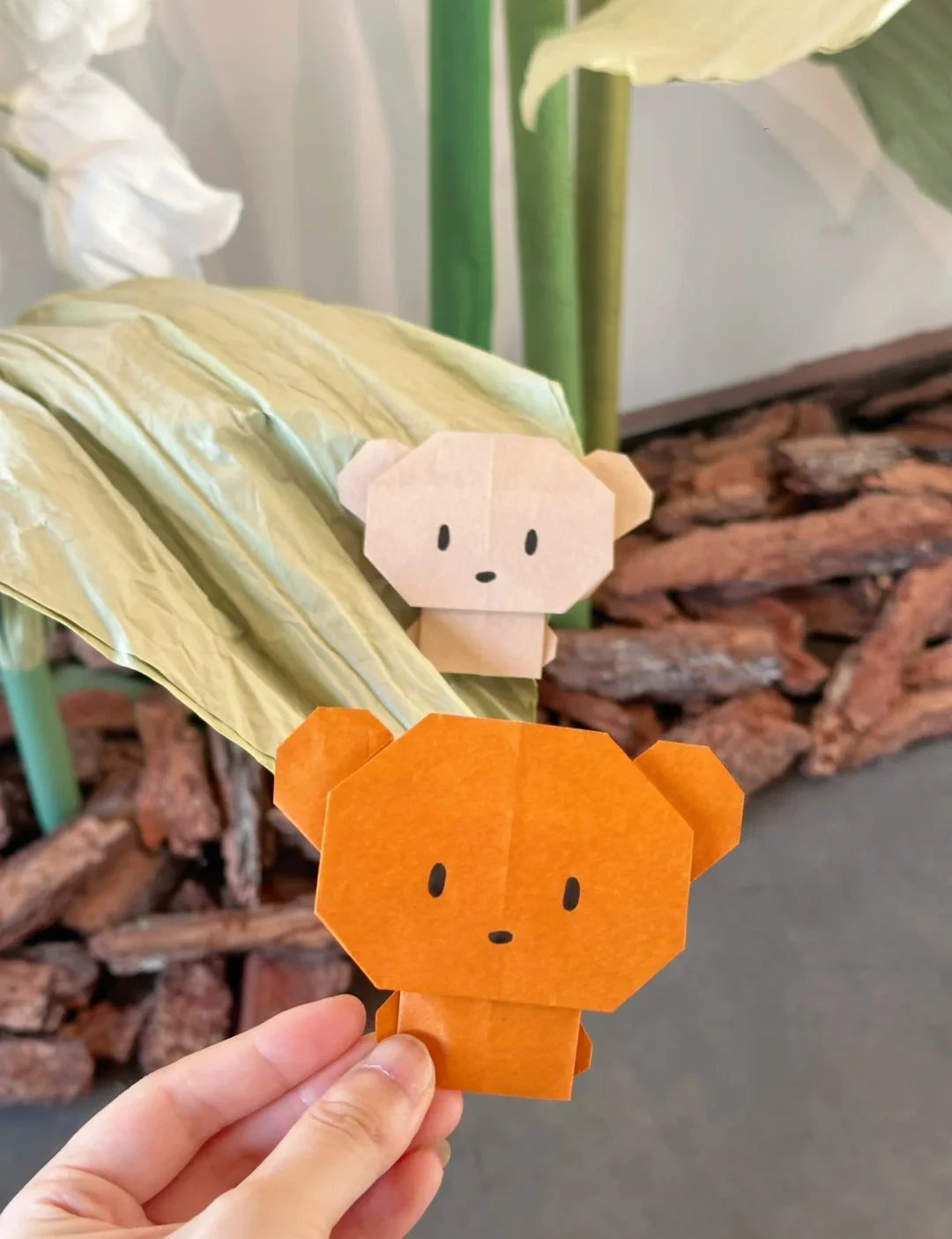 Open image at full size ↗
Use this finished example to compare the shape and proportions of your model.
Finished model
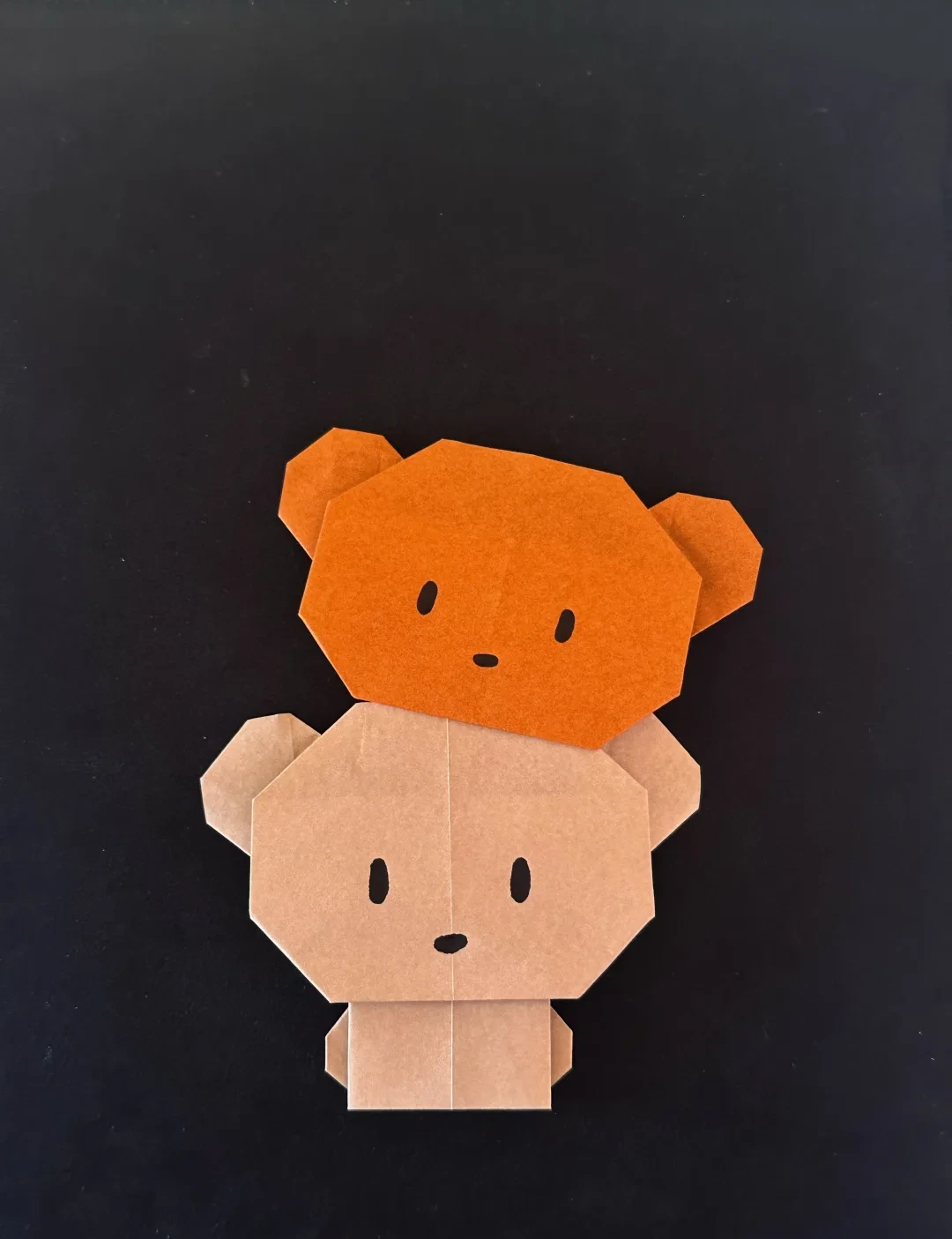 Open image at full size ↗
Use this finished example to compare the shape and proportions of your model.
Fold the starting strip
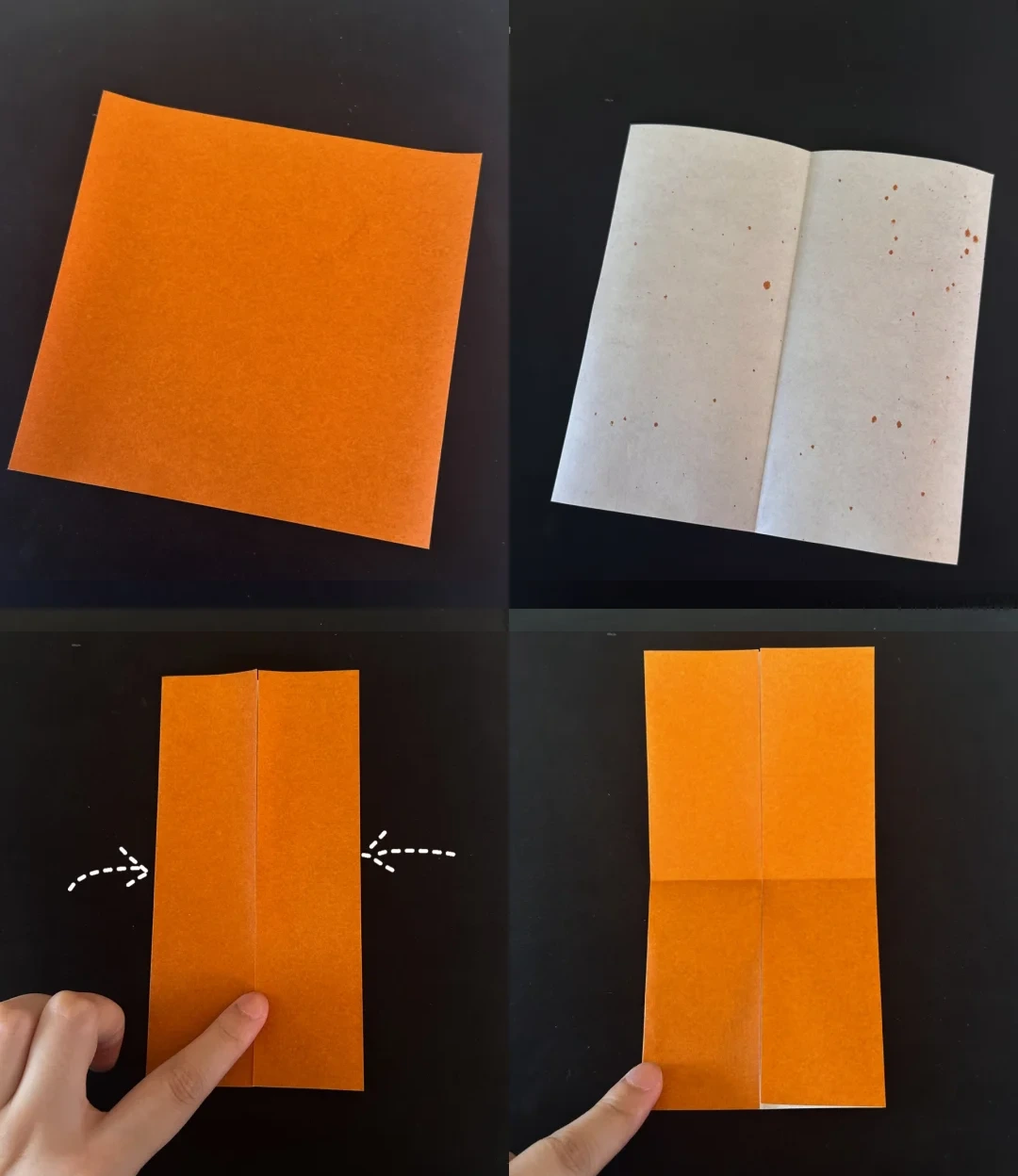 Open image at full size ↗
Crease the square in half vertically. Bring both side edges to the center.
Fold the long rectangle in half horizontally and unfold.
Mark the lower bands
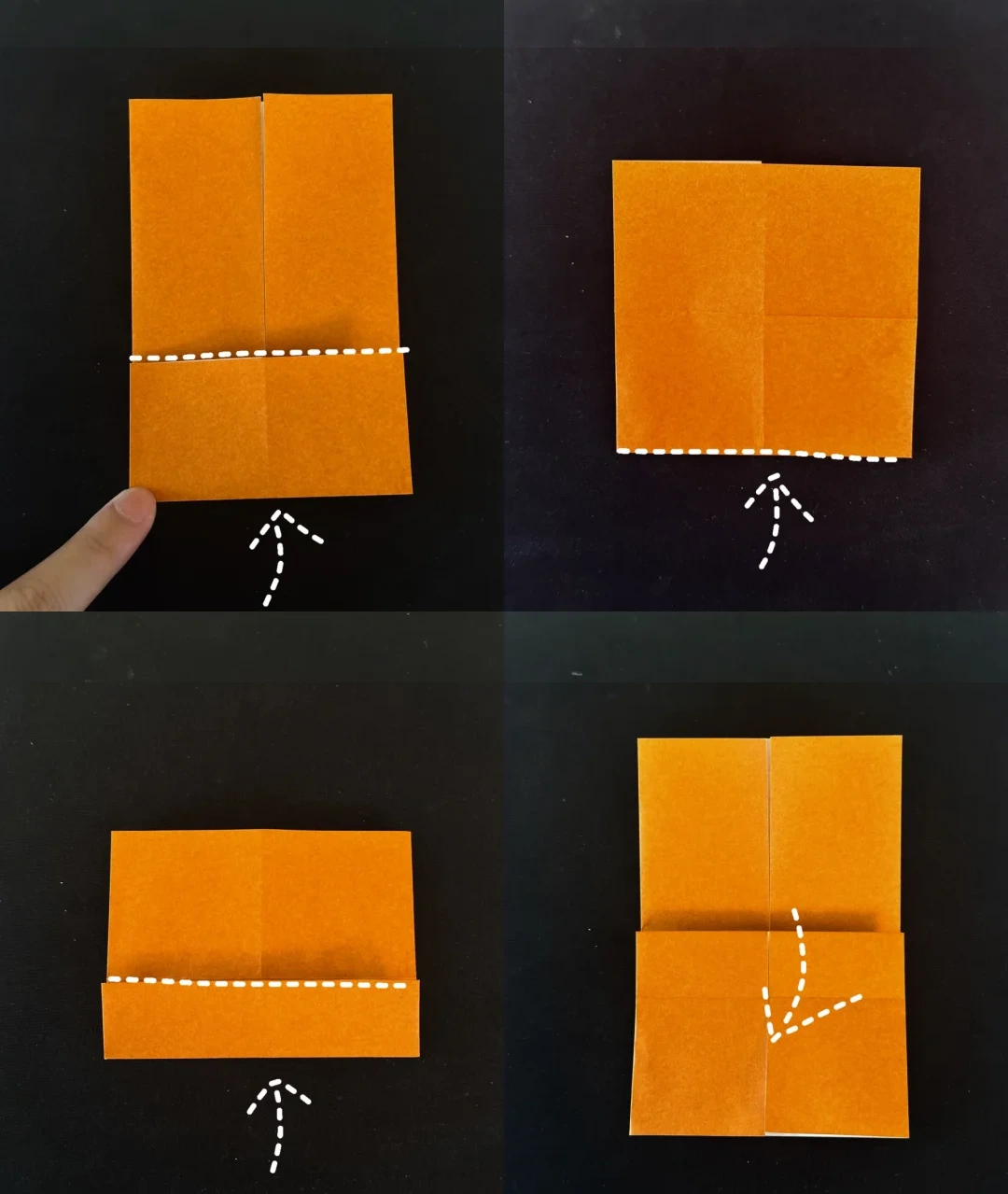 Open image at full size ↗
Bring the lower edge to the middle crease. Fold the lower section in half again along the next guide.
Lower the front flap as shown, keeping the crease bands visible.
Open the first pocket
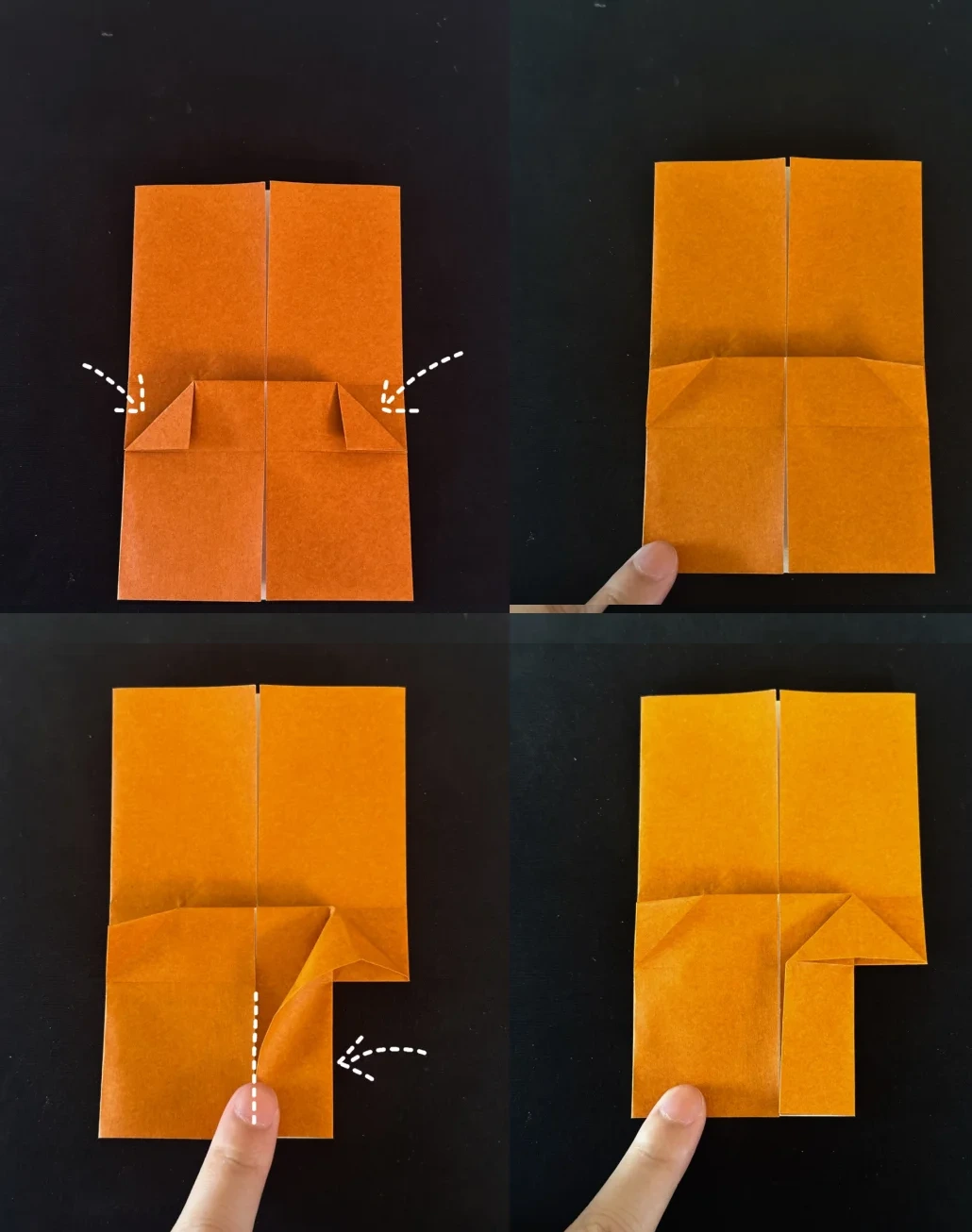 Open image at full size ↗
Fold the two corners inward and unfold them.
Bring the right section toward the center, open its pocket and squash it flat.
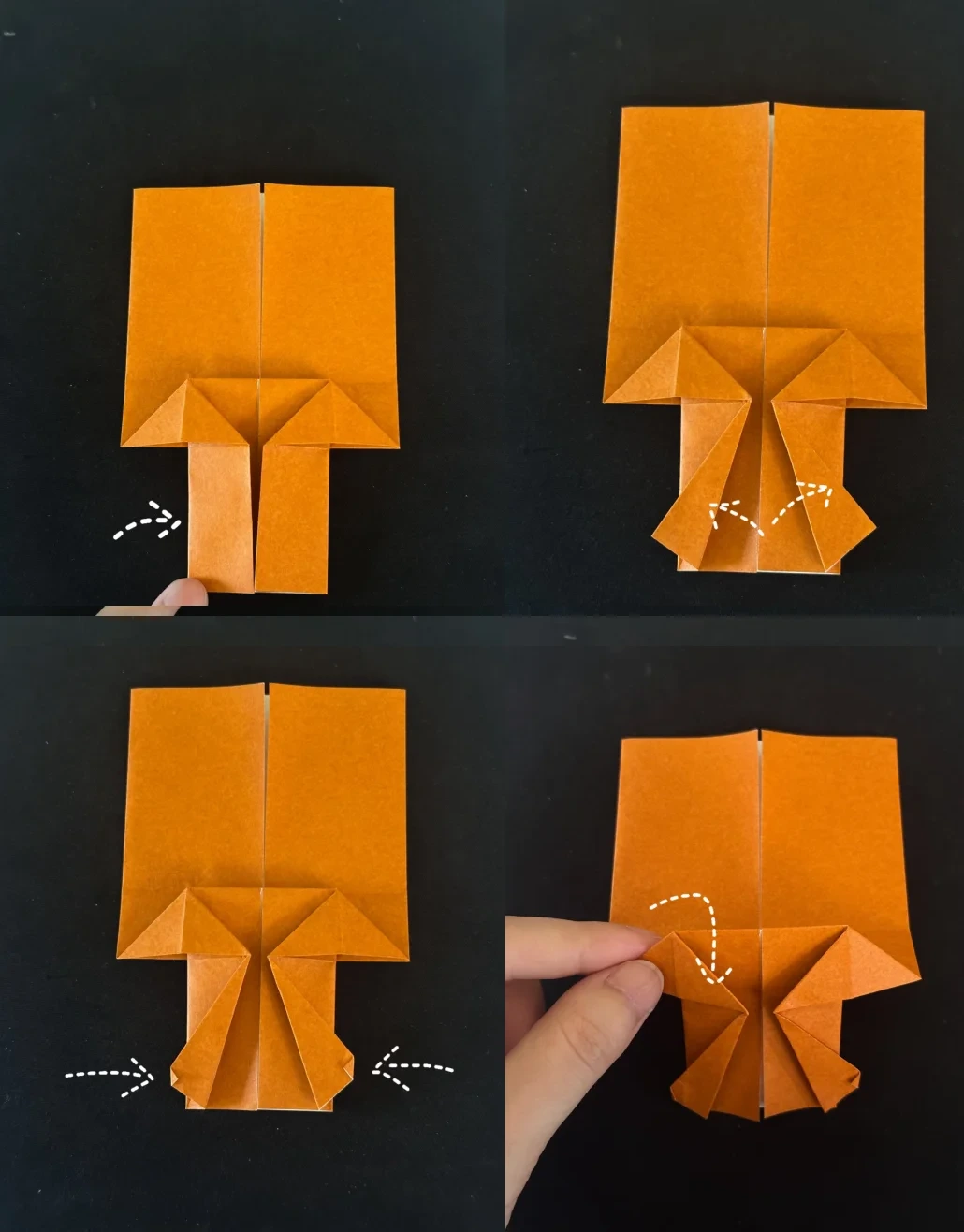
Form the narrow lower section
 Open image at full size ↗
Repeat the pocket fold on the left. Fold the two lower edges slightly inward.
Fold those edges outward along the guides, then lower the front layer.
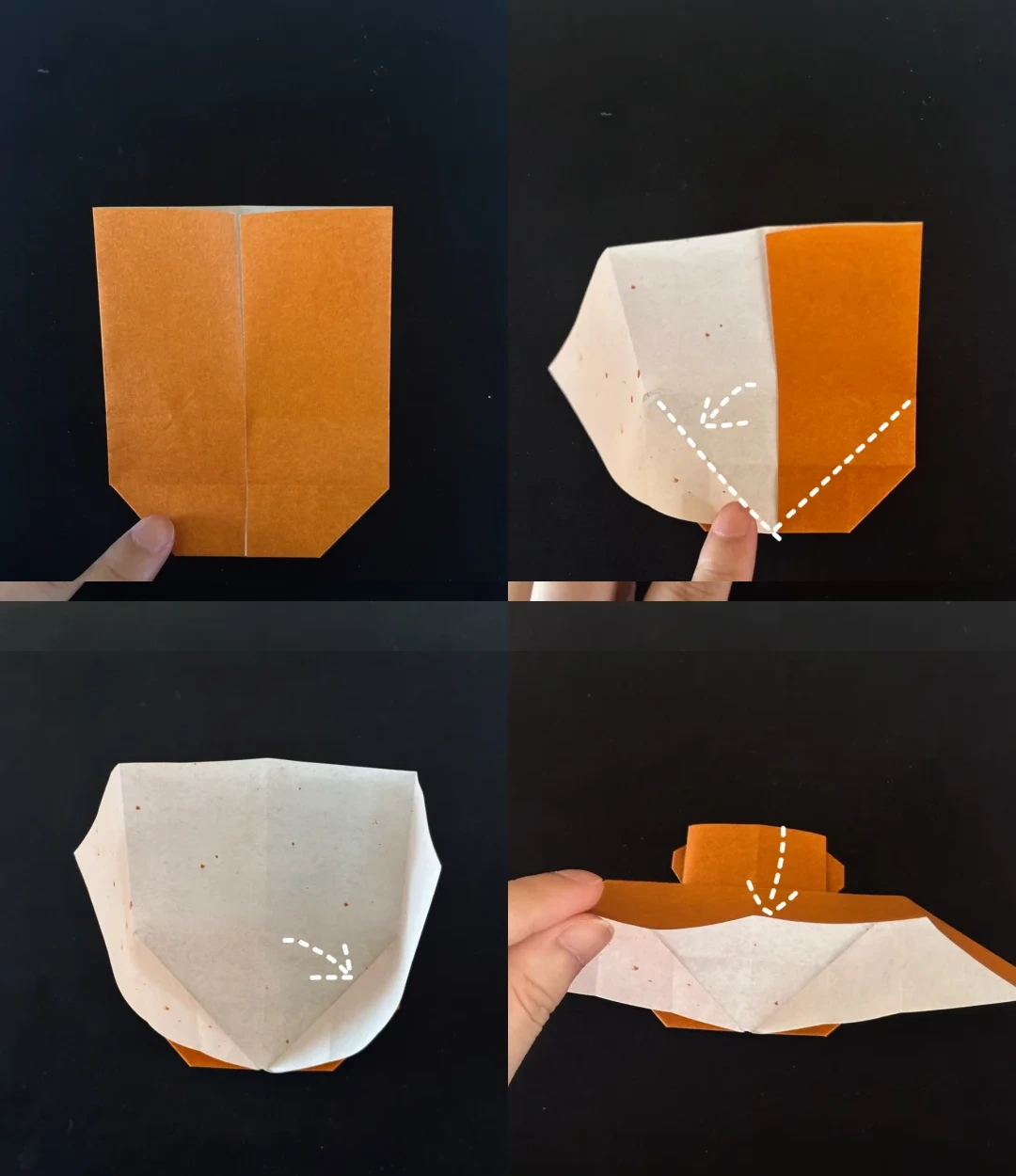
Round the head outline
 Open image at full size ↗
Open the left side and fold its corner inward along the diagonal guides.
Repeat on the right, then fold the indicated central flap downward.
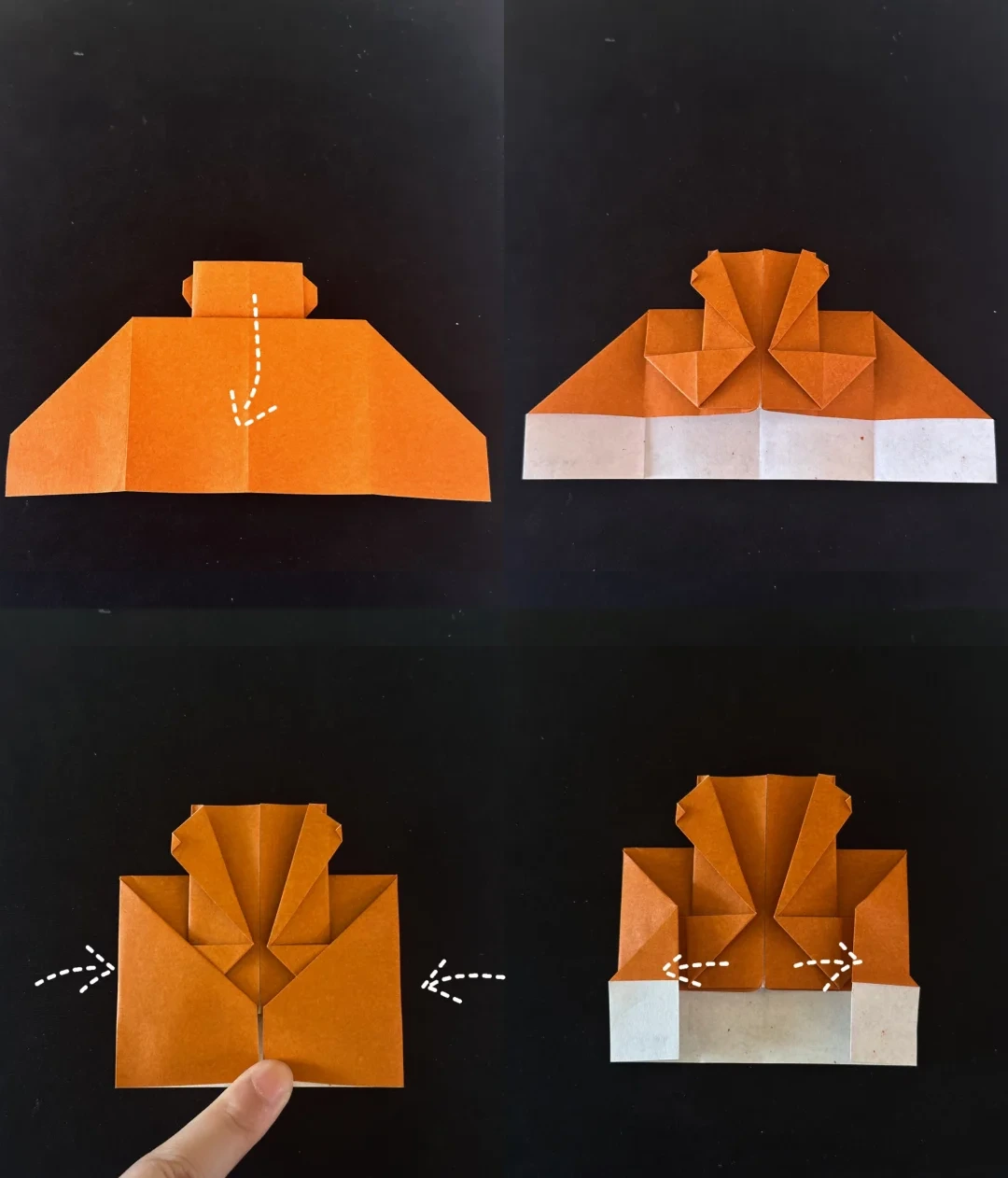
Flatten the back layers
 Open image at full size ↗
Squash the flap downward and turn the model over.
Fold both side sections to the center, then fold their outer layers back outward.
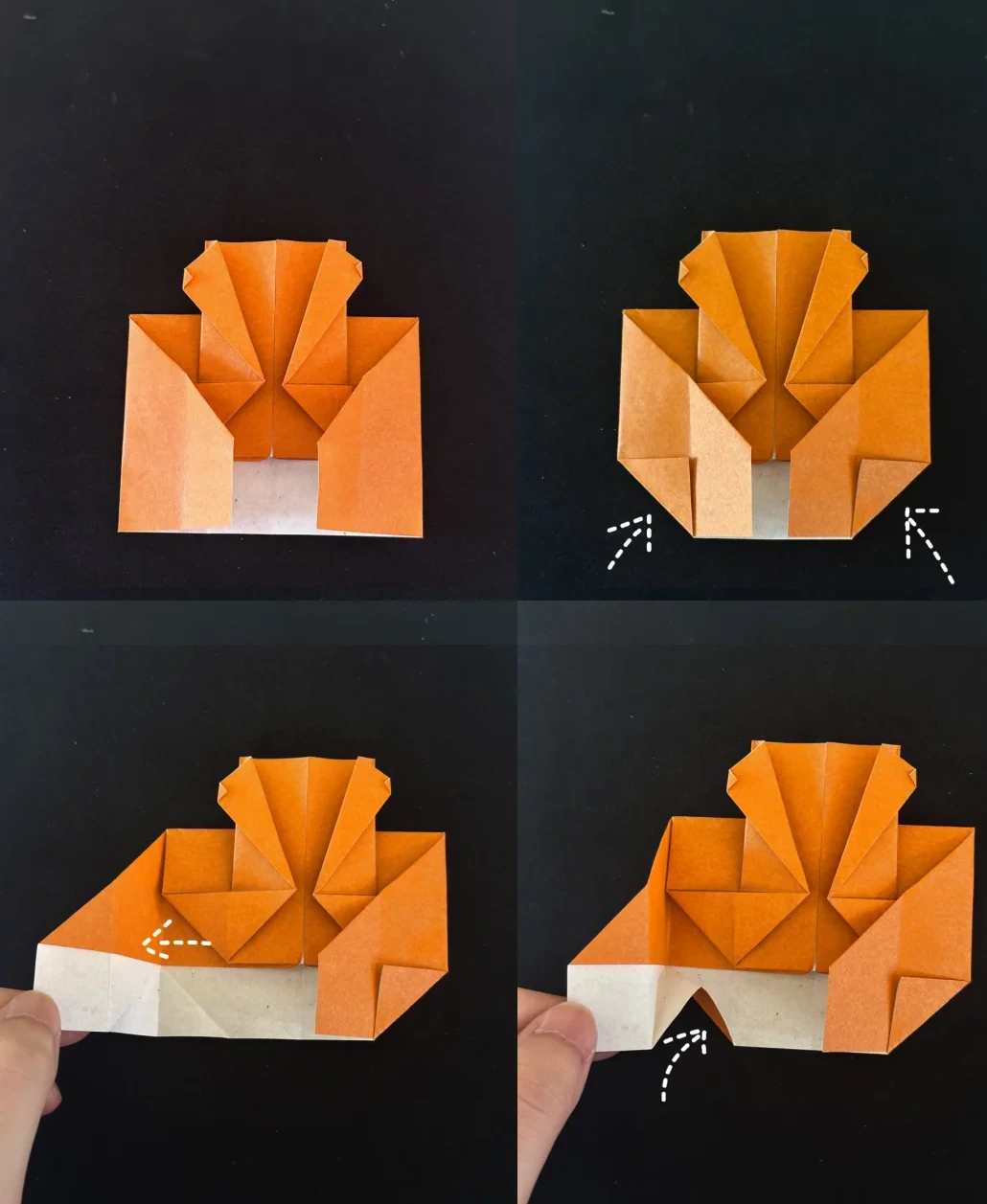
Precrease the lower corners
 Open image at full size ↗
Open the side folds. Fold the lower corners inward and unfold again.
Reverse the corner folds inward along their creases.
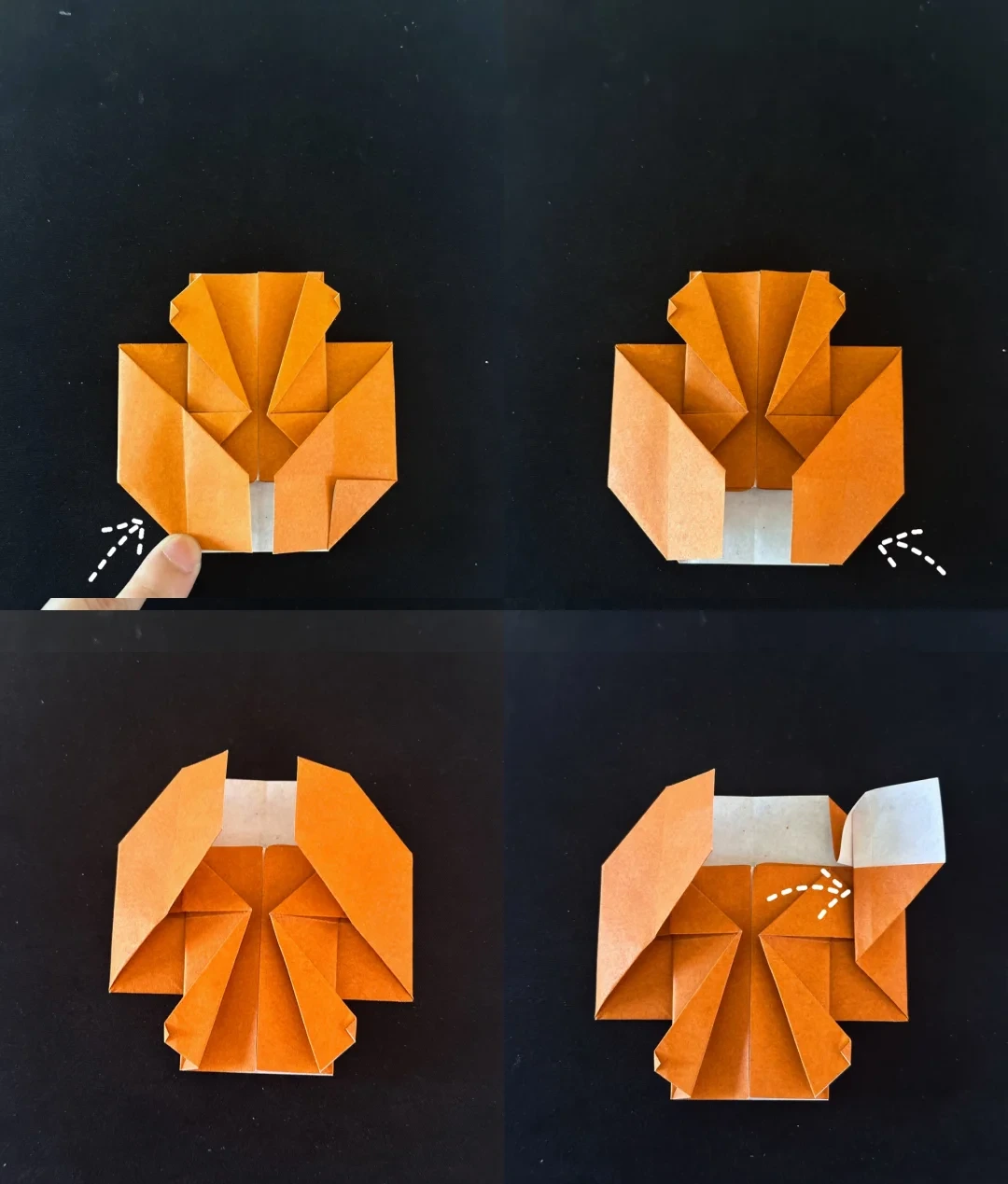
Prepare the ears
 Open image at full size ↗
Return the right-side layer to position and repeat on the other side. Rotate the model.
Open the upper-right pocket outward; repeat on the left.
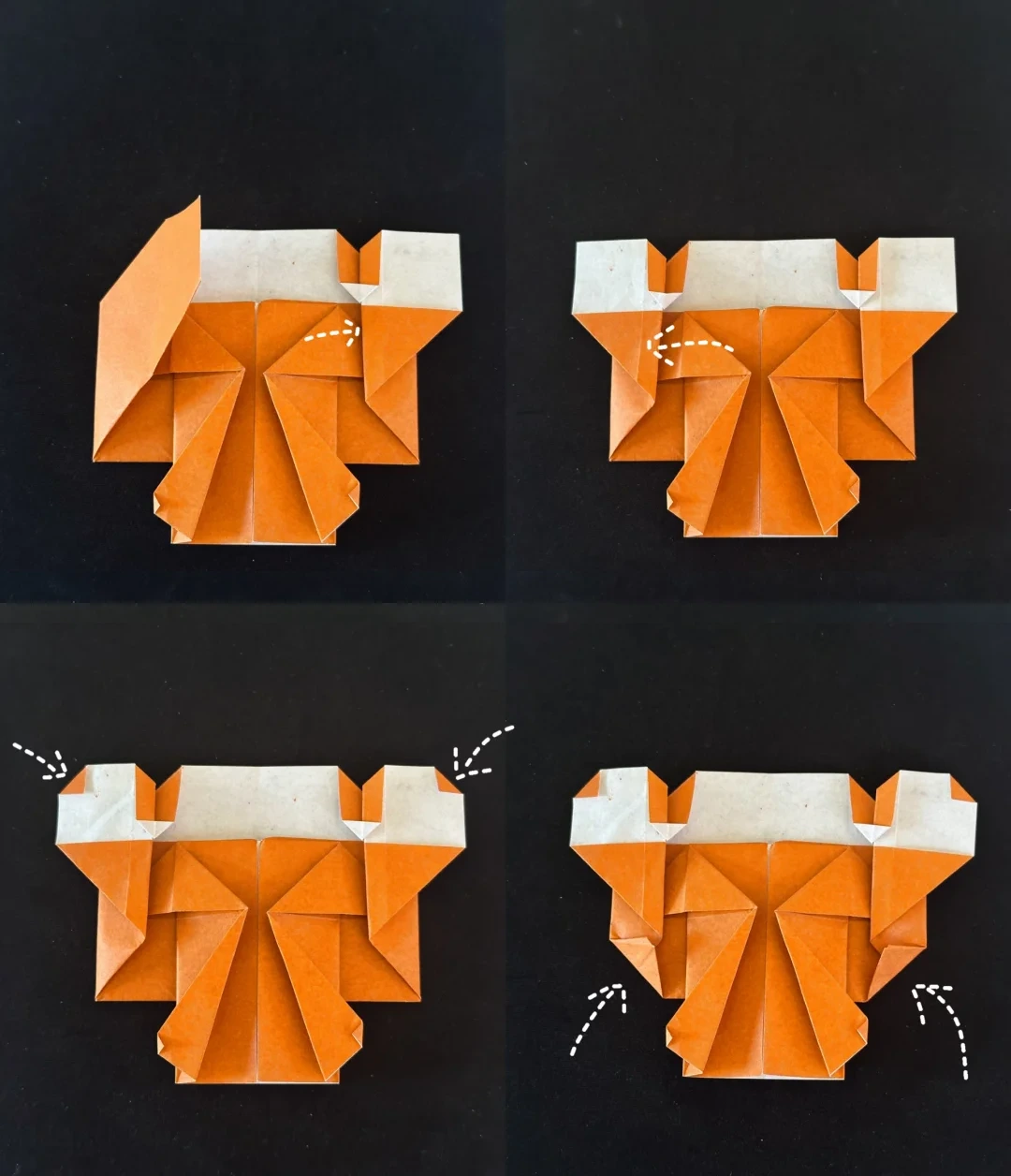
Round the ears and body
 Open image at full size ↗
Squash the right pocket flat and repeat on the left.
Fold the small outer corners inward to round the ears, then fold the indicated lower corners inward.
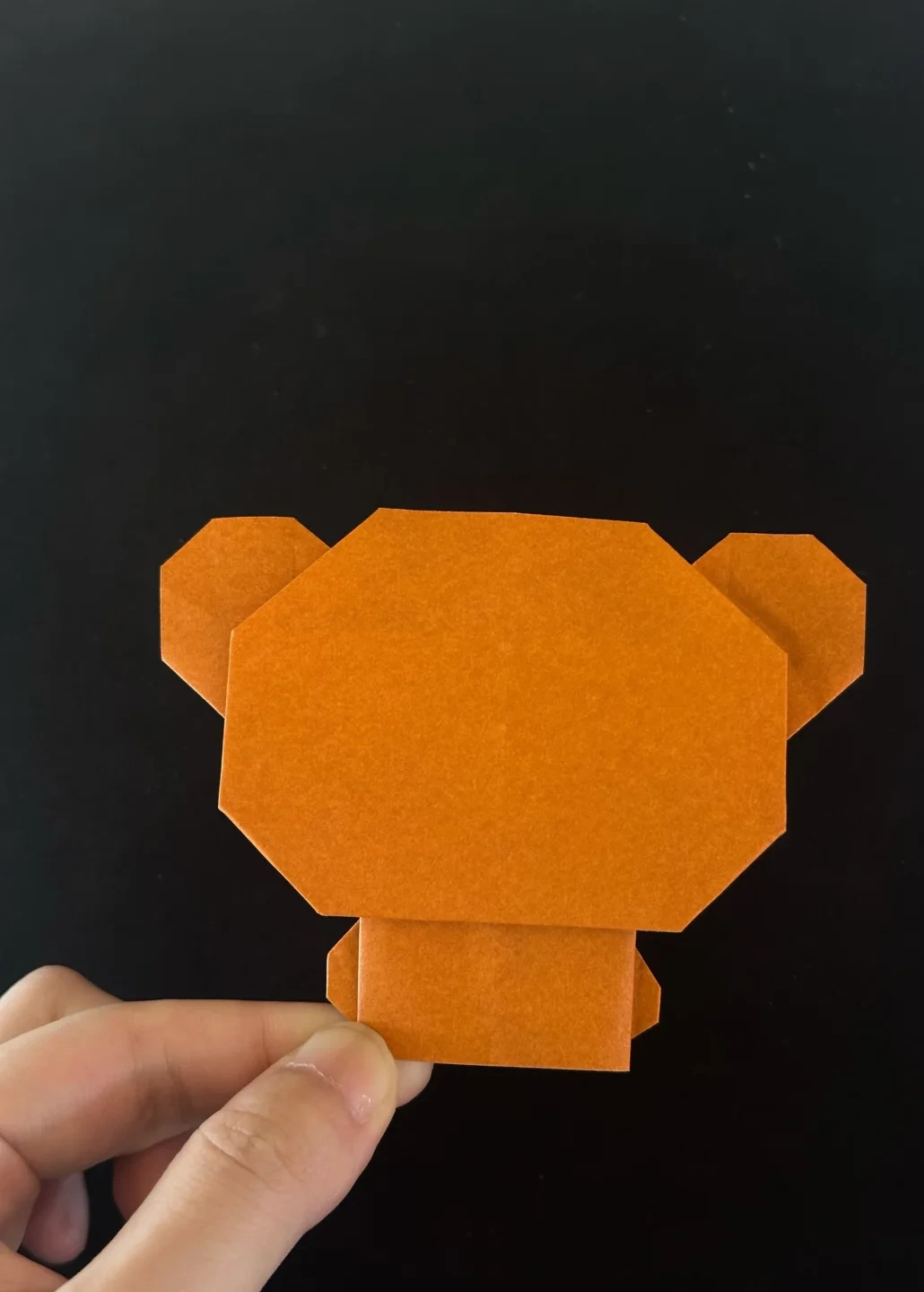
Turn the bear face up
 Open image at full size ↗
Turn the finished folds to the front and flatten the face and small body gently.
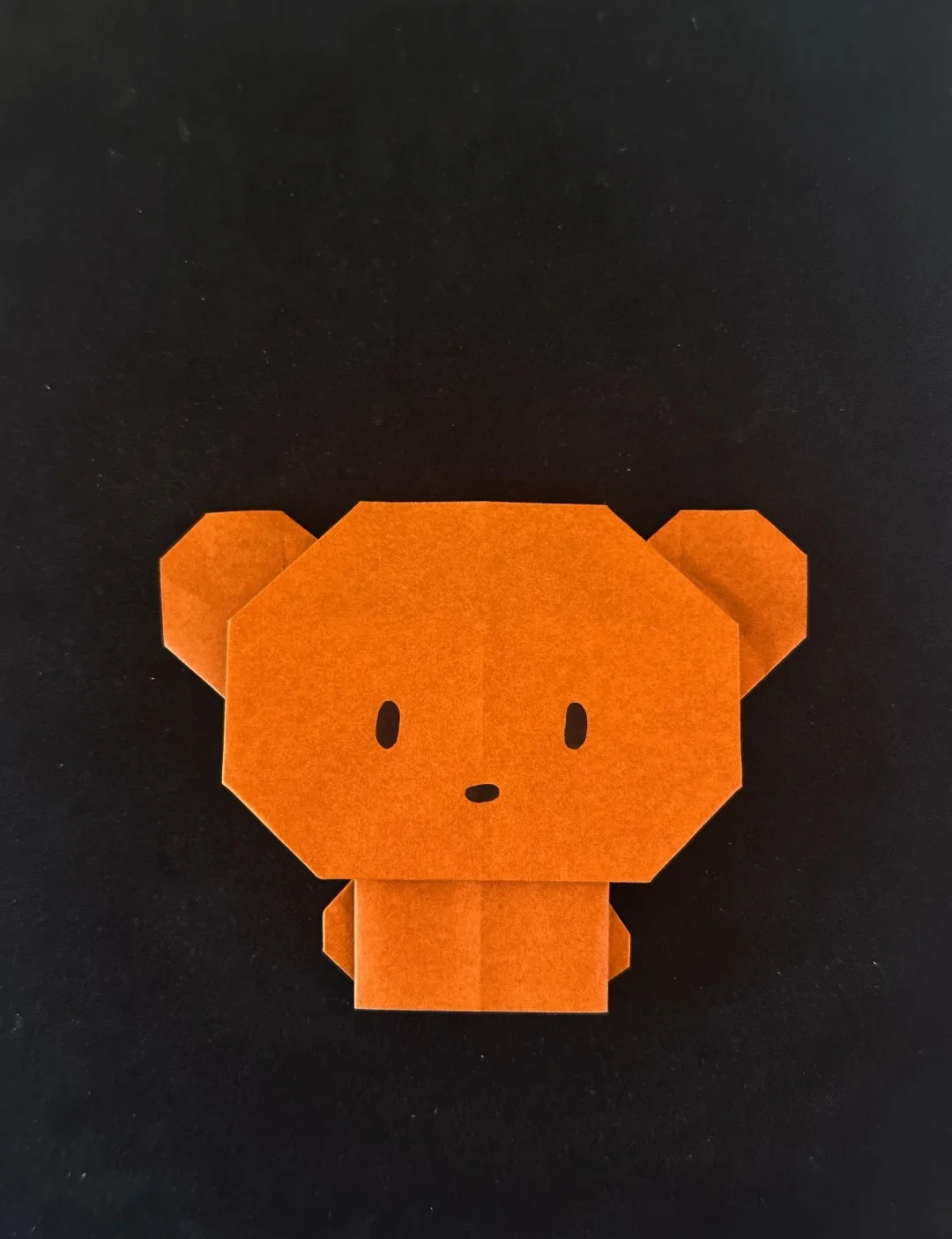
Draw the face
 Open image at full size ↗
Add two small eyes and a short oval nose with a fine marker.
Finished model
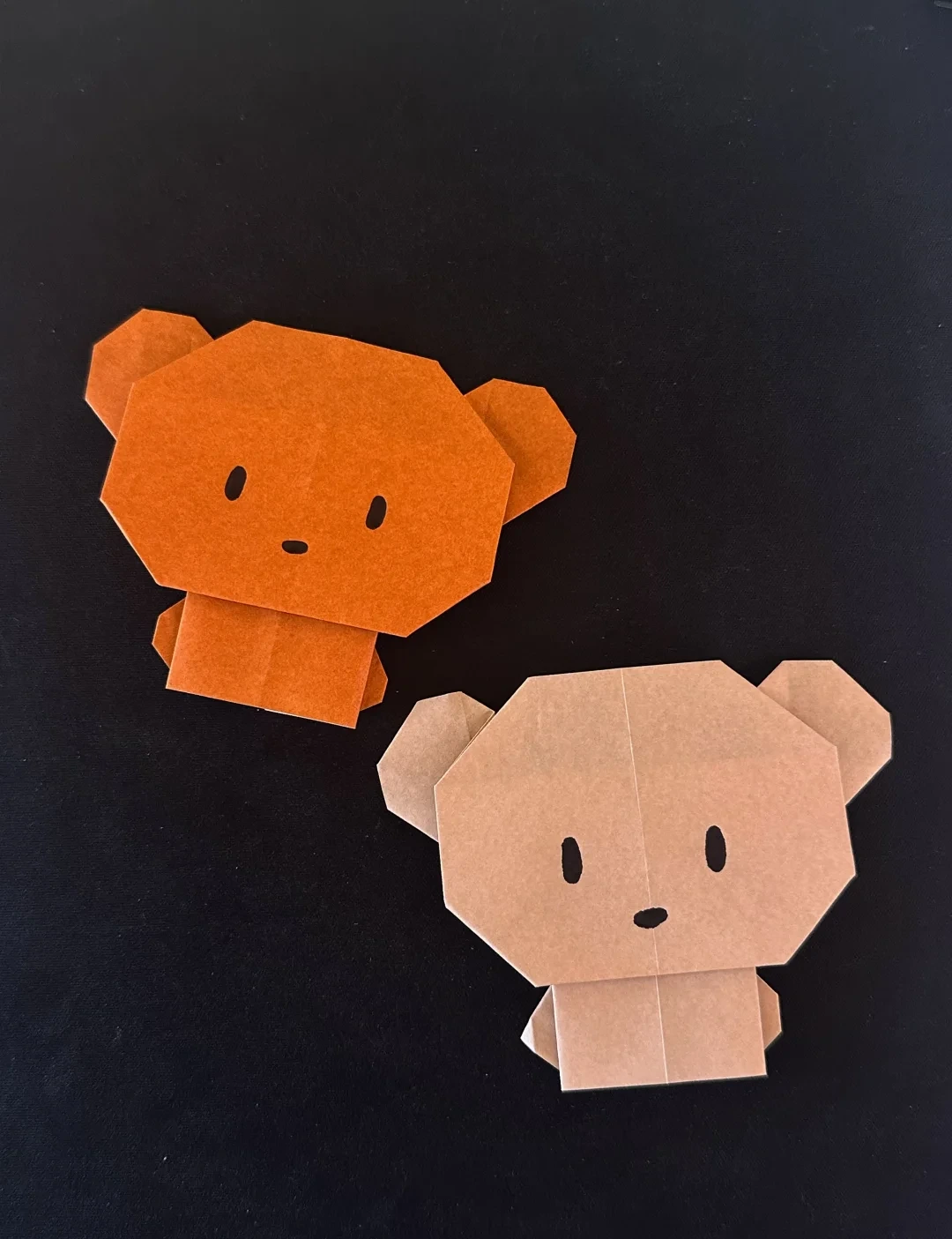 Open image at full size ↗
Use this finished example to compare the shape and proportions of your model.
Finished model
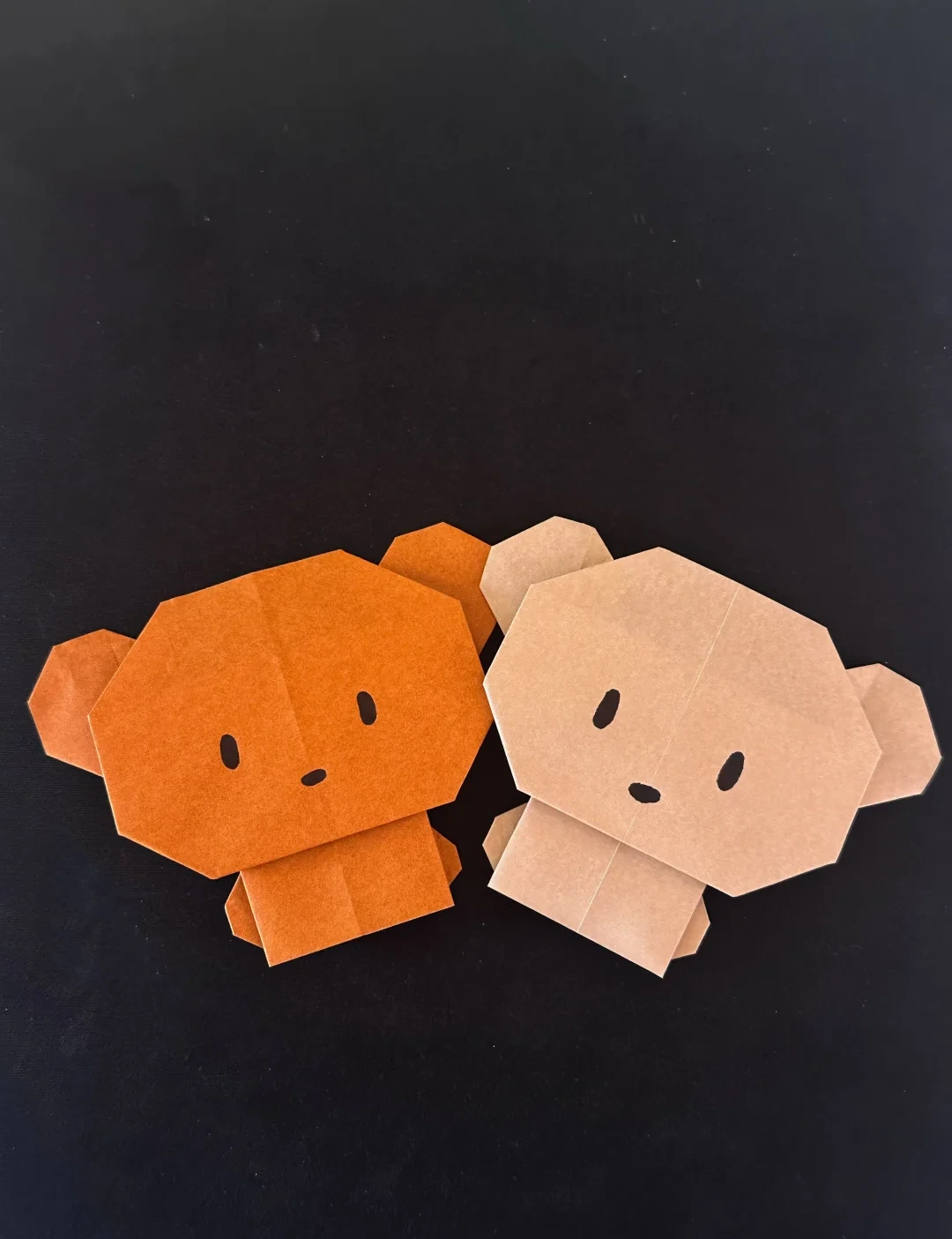 Open image at full size ↗
Use this finished example to compare the shape and proportions of your model.
Follow the diagrams alongside the step-by-step English instructions.
Choose your next project →